LLM structured extraction / ElevenLabs voice cloning / Remotion Lambda
PlanReel
Upload a Medicare plan PDF and get a narrated, captioned 1080p video in the agent's own cloned voice. A language model extracts every benefit into a strict schema and writes the script, ElevenLabs speaks it, and Remotion renders it across 94 AWS Lambdas for under three cents.
- LLM structured extraction
- ElevenLabs voice cloning
- Remotion Lambda
- Next.js 15
- BullMQ
- Zod
- Postgres
- AWS
- Role
- Full-stack and AI engineer
- Year
- 2026
- per 1080p render, measured
- $0.028
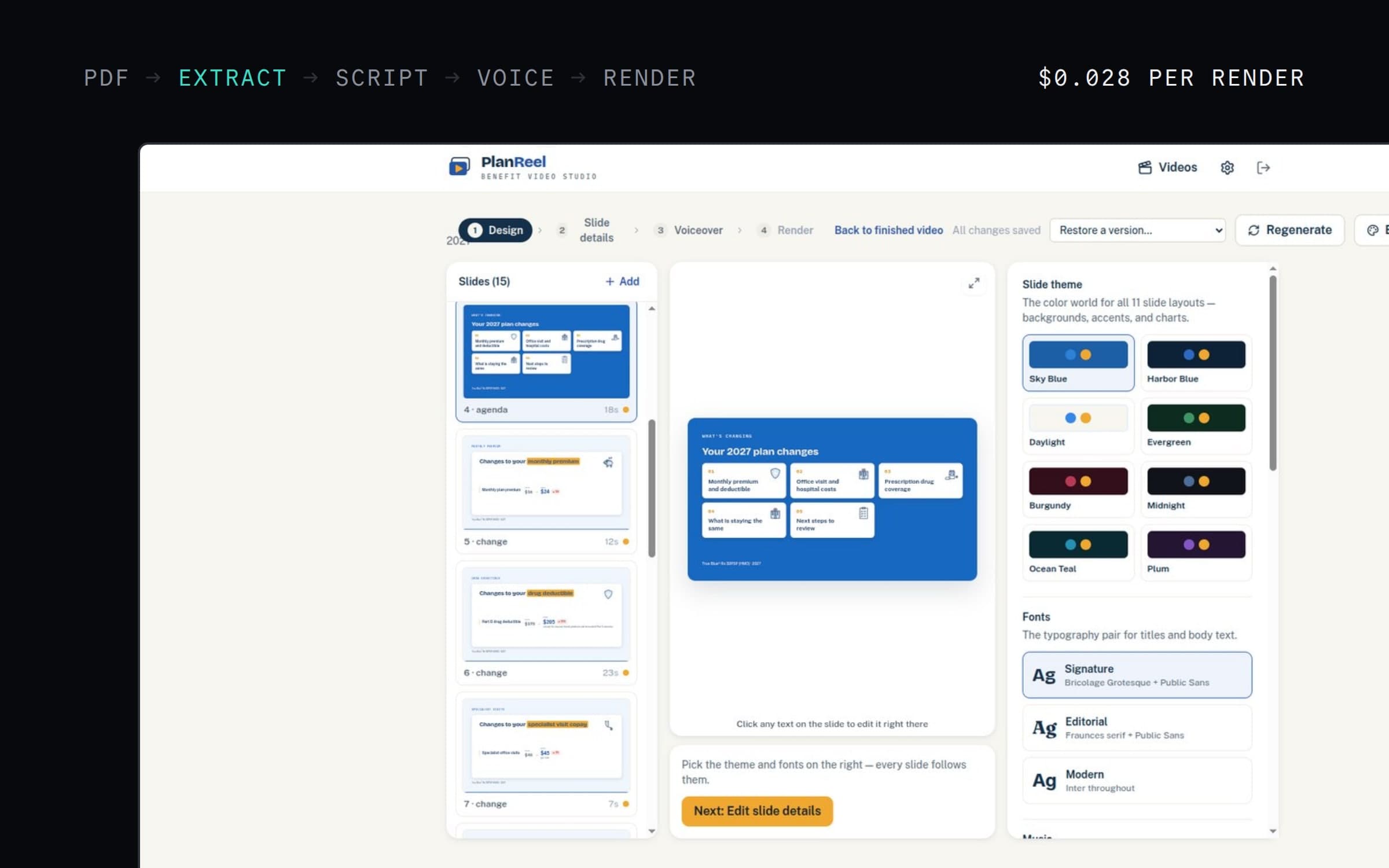
Medicare agents explain the same plan documents to client after client, one phone call at a time. PlanReel turns a plan's Summary of Benefits or Annual Notice of Change into a personalised video: that plan's real numbers, in the agent's own voice, ready in minutes.
The model drafts. The agent approves every word. Nothing reaches a client that a person hasn't read.
Where the AI is, and where it isn't
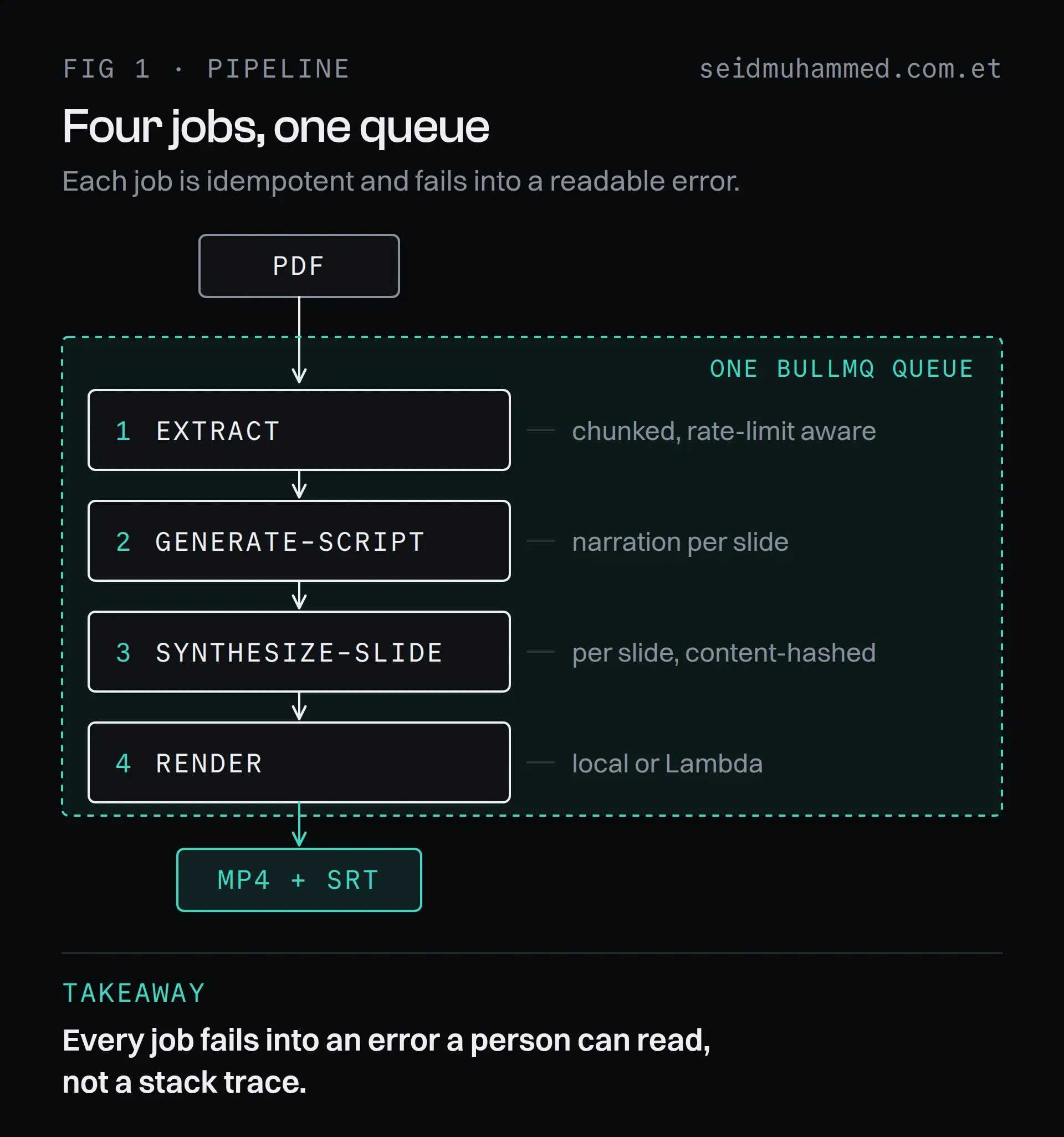
Four jobs on one queue. Each is idempotent, and each fails into an error a person can read.
- Reading the document. The PDF goes to the model with a strict JSON schema generated from Zod. Money is never a float: every cost is integer cents plus the exact string the document printed, so the screen can be audited against the PDF line by line.
- Writing the script. Eighth-grade reading level, no exclamation points, every number on screen spoken aloud, and nothing invented. Video endings are provided as data and used verbatim, because a real user needed the video to never say "call me".
- Speaking it. ElevenLabs synthesises each slide in the agent's cloned voice and returns character-level timings. Those timings drive the captions and make each figure count up on screen at the moment it is spoken.
- What it never does. It doesn't decide what a plan covers, it doesn't send anything to a client, and it doesn't put a number on screen that a human hasn't approved.
The engineering around the model
A 32-page plan once asked for 34,983 tokens against a 30,000 tokens-per-minute limit. Waiting can't fix a request that will never fit, so extraction splits the PDF into 12-page chunks, runs them in sequence inside one rate-limit window, halves any chunk that is still too big, and merges the results with page numbers intact.
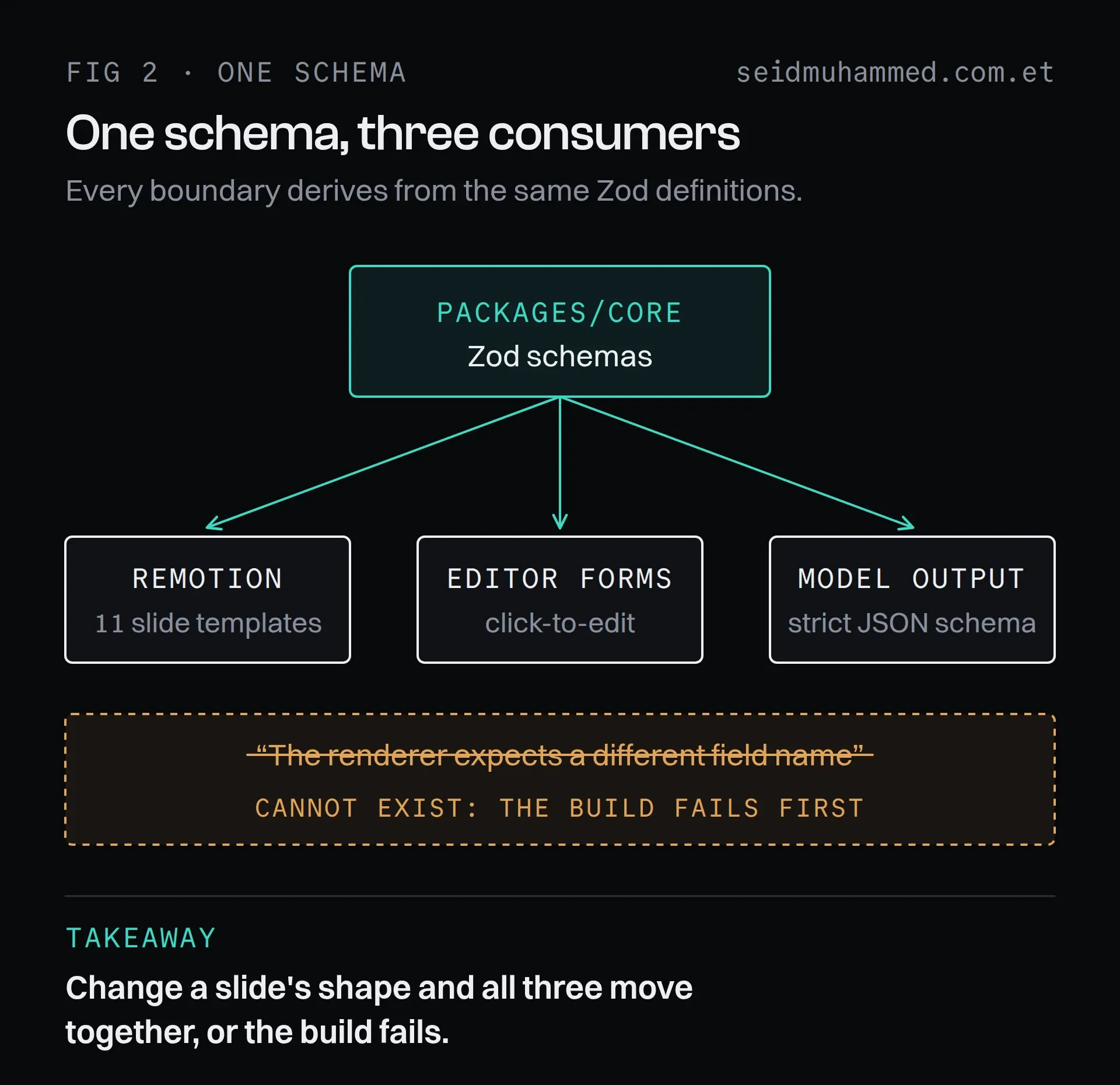
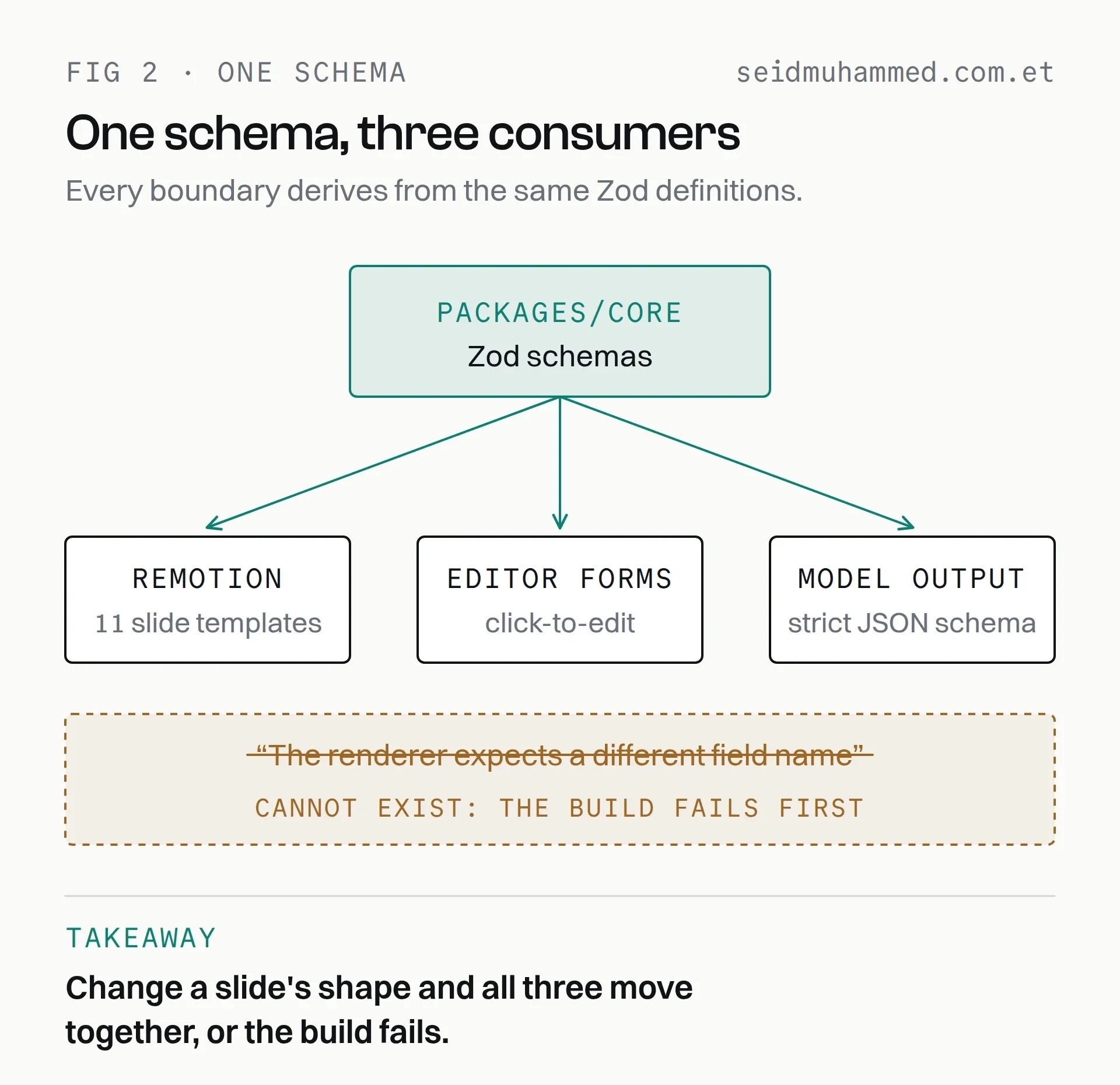
The renderer, the editor and the model read the same schema, so a field-name mismatch between them can't be written.
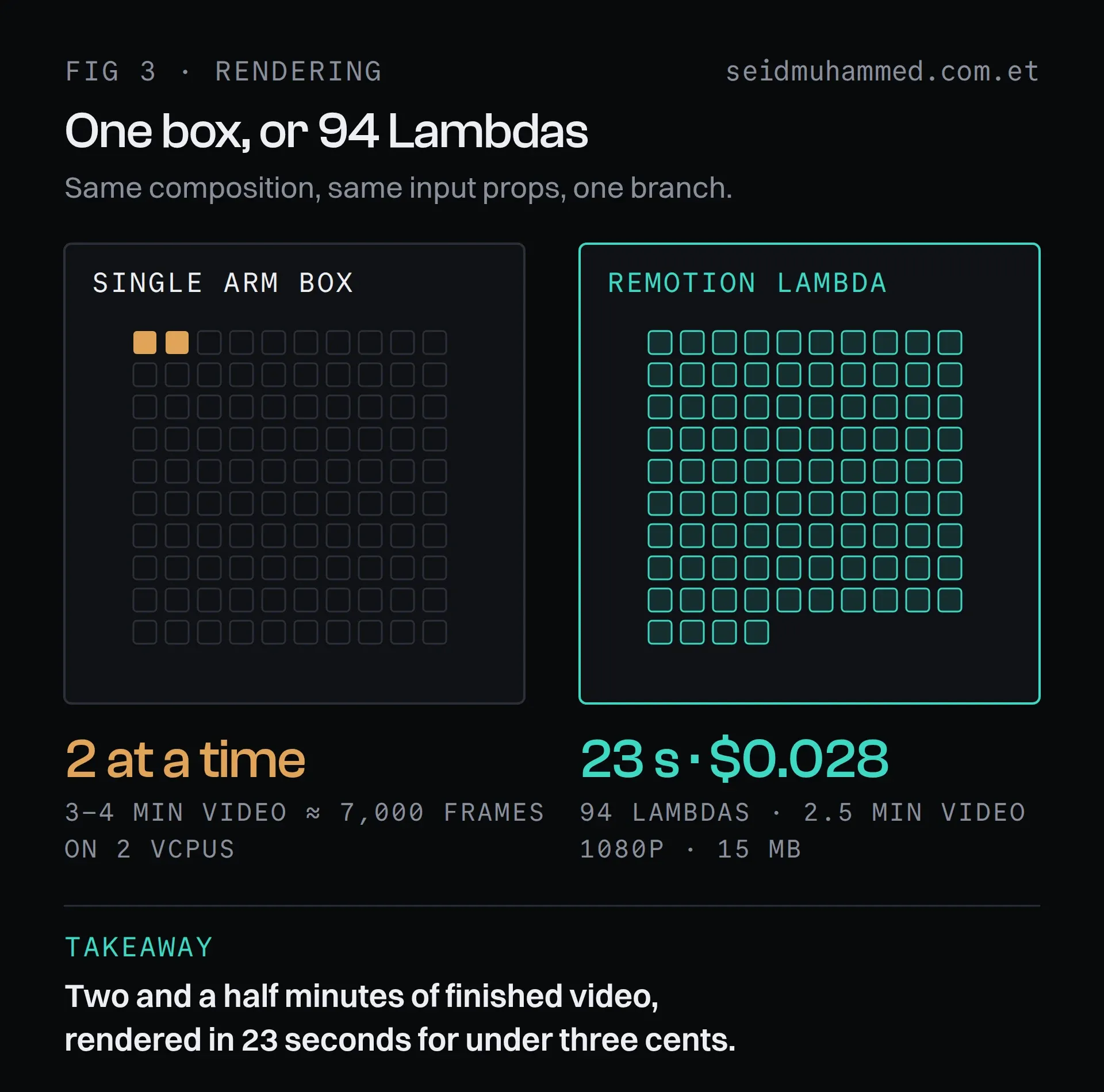
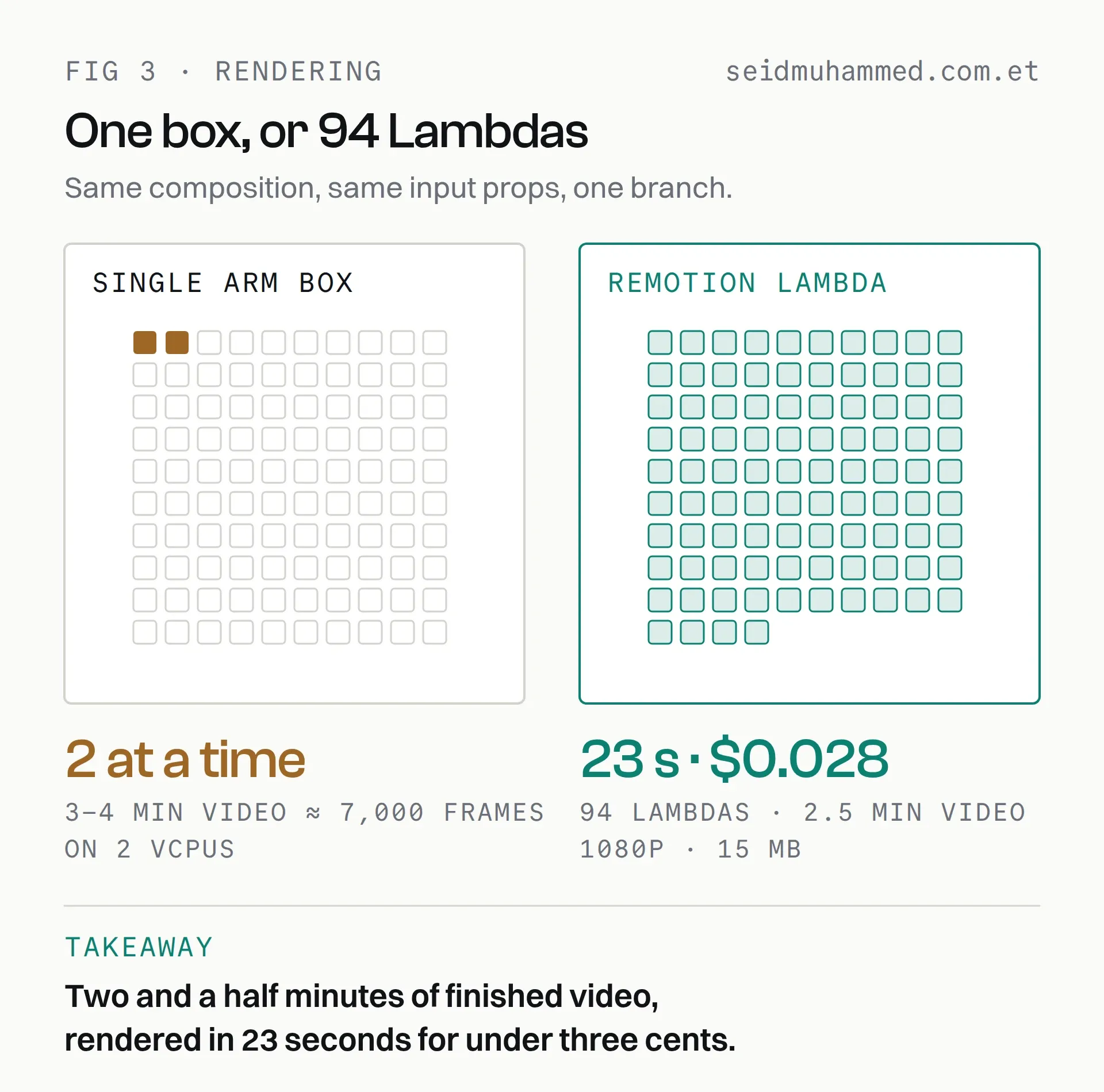
Measured on a real render: 94 concurrent Lambdas, 23 seconds, $0.028, 15 MB of 1080p H.264.
The product
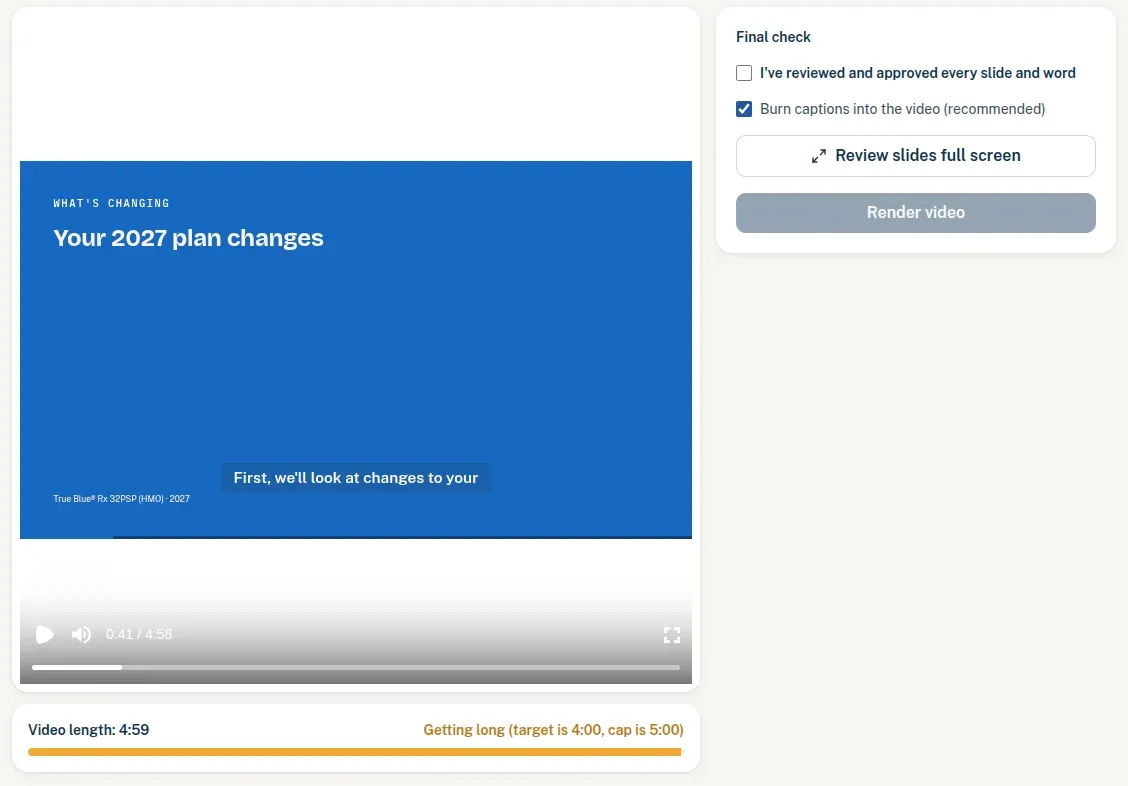
Nothing renders until the agent has approved every slide. Above, the editor: click any text on a slide and edit it in place.
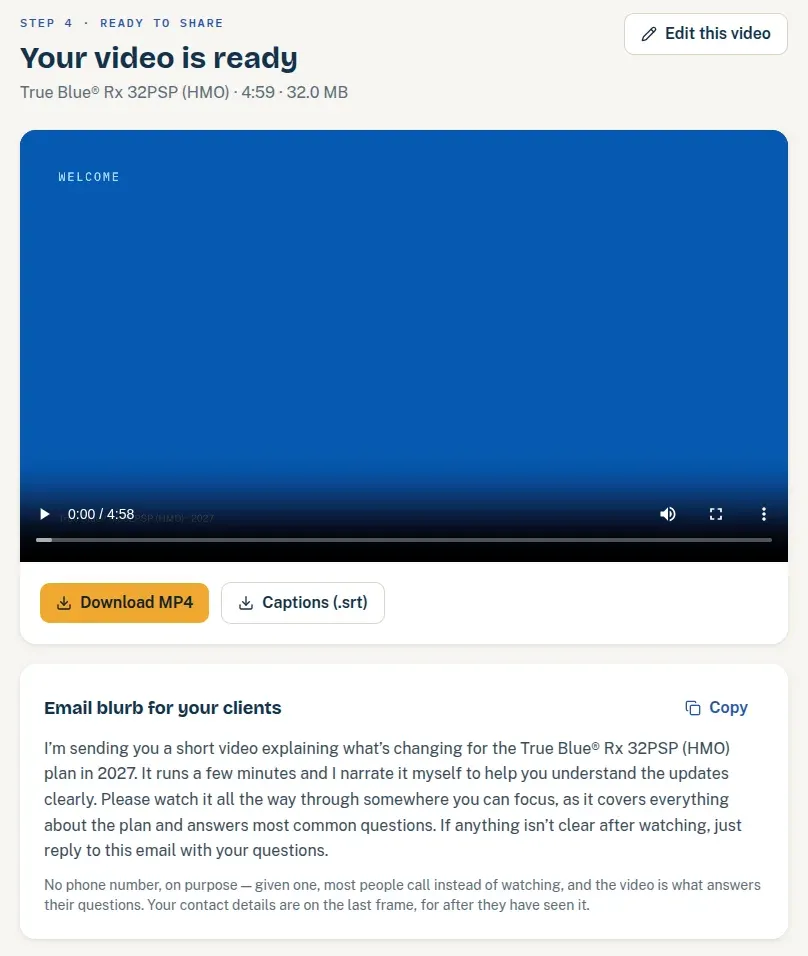
The finished video, an SRT caption file, and an email blurb that leaves the phone number out on purpose.
The full engineering story, including the schema that was valid but rejected and the video that kept stopping, is in Engineering PlanReel.